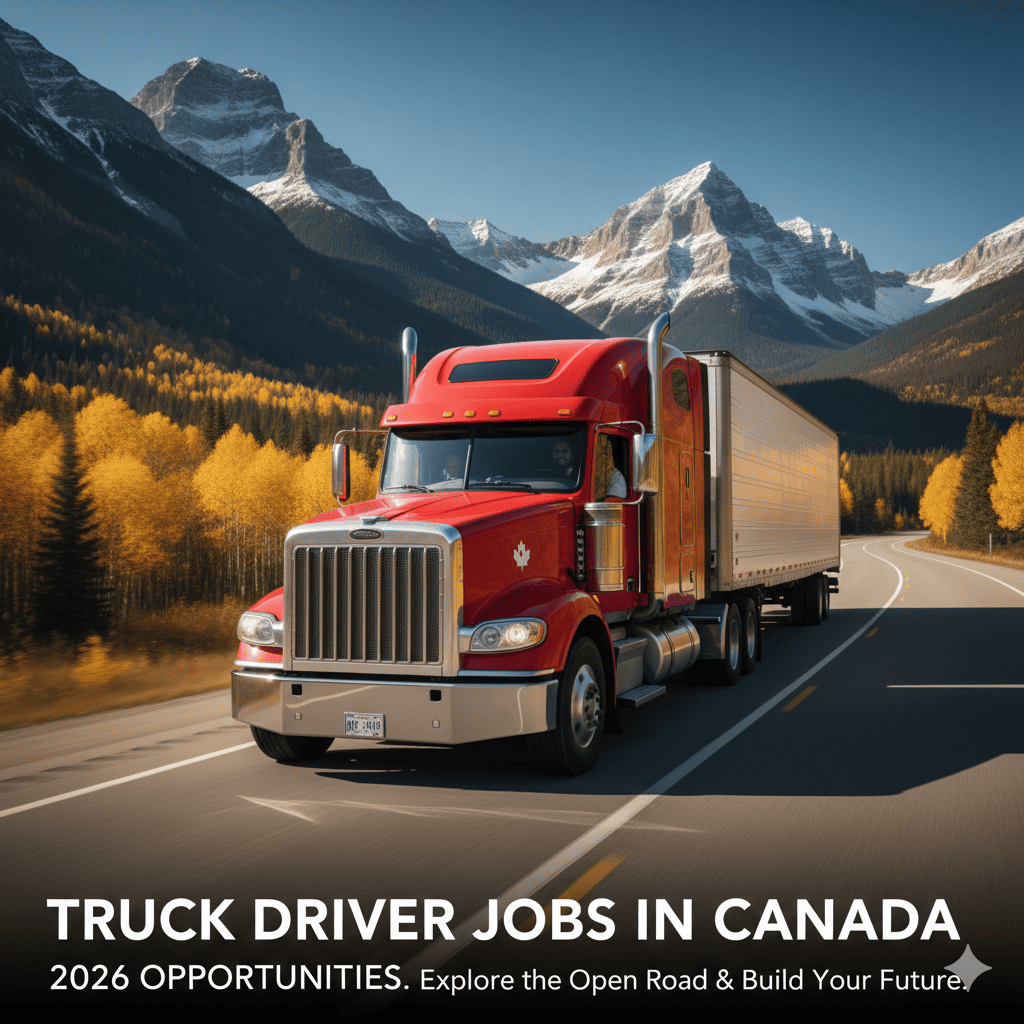
Complete Guide to Truck Driver Jobs in Canada (2025–2026)
Truck driver jobs in Canada are among the most in-demand and practical career options for both local and foreign workers looking for stable income, long-term employment, and immigration opportunities. Canada relies heavily on trucking to move goods across its vast geography, connecting ports, cities, industrial zones, farms, and retail markets. Due to an aging workforce, rapid growth in e-commerce, and persistent labour shortages, Canada continues to face a significant shortage of qualified truck drivers. As a result, employers across the country are actively hiring, and many are open to supporting foreign workers through work permits and immigration pathways. For individuals willing to meet licensing requirements and handle the realities of long-haul or regional driving, trucking can offer strong earnings, job security, and a realistic path toward permanent residency.
Why Truck Driving Is a High-Demand Job in Canada
Canada’s economy depends on trucking more than most people realize. The majority of goods consumed in Canada are transported by trucks at some point in the supply chain. From food and fuel to construction materials and consumer products, trucks keep the country running. However, a large portion of Canada’s current truck driver workforce is approaching retirement age, and not enough young drivers are entering the profession to replace them. This gap has created long-term demand for drivers across provinces, especially in Ontario, Alberta, British Columbia, Manitoba, and Saskatchewan. Seasonal demand also increases during peak periods such as harvest season, winter fuel transport, and retail surges before holidays.
For foreign workers, this shortage translates into opportunity. Truck driving is one of the few occupations where employers are often willing to sponsor work permits because they struggle to fill positions locally. Many trucking companies operate on tight schedules and contracts and cannot afford driver shortages, making qualified drivers highly valuable. Unlike some other jobs, trucking rewards experience and reliability more than formal education, making it accessible to a wide range of applicants.
Types of Truck Driver Jobs in Canada
Truck driving jobs in Canada are not all the same. The industry offers a variety of roles depending on distance, cargo type, schedule, and level of experience. Understanding these categories helps job seekers choose positions that match their skills, lifestyle preferences, and income goals.
Long-Haul Truck Driver Jobs
Long-haul or over-the-road truck drivers transport goods across provinces and sometimes across international borders, including routes between Canada and the United States. These jobs usually pay the highest wages but involve extended time away from home. Drivers may spend days or weeks on the road, sleeping in their trucks and following strict delivery schedules. Long-haul drivers are in constant demand and are often the first roles offered to foreign workers because shortages are most severe in this category.
Regional and Short-Haul Truck Driver Jobs
Regional or short-haul drivers operate within a specific province or region and typically return home daily or every few days. These jobs offer more predictable schedules and better work-life balance but may pay slightly less than long-haul positions. Regional driving is common in urban areas, ports, warehouses, and distribution centers.
Specialized Truck Driving Jobs
Specialized truck drivers handle specific types of cargo such as fuel, hazardous materials, oversized loads, refrigerated goods, or heavy equipment. These roles usually require additional certifications and experience but come with higher pay rates. Tanker drivers, flatbed drivers, and drivers transporting dangerous goods are often among the highest-paid in the industry.
Salary Expectations for Truck Drivers in Canada
Truck driver salaries in Canada vary based on experience, distance traveled, cargo type, and province. Entry-level truck drivers can expect to earn approximately CAD $45,000 to $55,000 per year. With experience, many drivers earn between CAD $60,000 and $80,000 annually. Long-haul and specialized drivers can earn over CAD $90,000 to $120,000 per year, particularly when paid by mileage, load, or performance bonuses.
Some employers pay hourly wages, while others pay per mile, per trip, or per load. Additional earnings may come from overtime, overnight allowances, safety bonuses, and fuel efficiency incentives. Many trucking companies also offer benefits such as health insurance, retirement plans, paid vacation, and paid training. For foreign workers, some employers provide relocation support, accommodation assistance, or help with licensing and immigration paperwork.
Basic Requirements to Become a Truck Driver in Canada
To work legally as a truck driver in Canada, you must meet several basic requirements. While exact rules vary by province, most employers and licensing authorities expect applicants to meet minimum standards related to age, education, health, and driving history.
Age, Education, and Language Requirements
Most provinces require truck drivers to be at least 18 or 21 years old, depending on the type of license and whether the job involves cross-border driving. A high school diploma is often preferred but not always mandatory. English language proficiency is essential, as drivers must read road signs, communicate with dispatchers, complete logbooks, and interact with law enforcement. In Quebec, French may also be required.
Medical and Driving Record Requirements
Truck drivers must pass a medical examination to ensure they are physically fit to operate heavy vehicles safely. Good vision, hearing, and overall health are essential. A clean or acceptable driving record is also required. Serious traffic violations, impaired driving offenses, or a history of unsafe driving can disqualify applicants from obtaining a commercial license or being hired by reputable employers.
Truck Driver Licensing in Canada
Truck driving in Canada requires a commercial driver’s license, and licensing is regulated at the provincial level. While the names and classifications vary slightly, most provinces require a Class 1 or equivalent license for operating tractor-trailers and large commercial trucks.
Commercial Driver’s License (CDL) Process
The licensing process typically involves obtaining a learner’s permit, completing mandatory training, passing a written knowledge test, and successfully completing a road test in a commercial vehicle. Some provinces require completion of an approved Mandatory Entry-Level Training (MELT) program, which includes classroom instruction and practical driving hours. Training costs can be significant, but some employers reimburse or cover training expenses for committed drivers.
License Conversion for Foreign Drivers
Foreign truck drivers may be able to convert their existing licenses depending on their country of origin and driving experience. However, most will still need to complete Canadian testing and training to meet provincial standards. Employers sometimes assist with this process by guiding drivers through licensing steps or partnering with training schools.
Visa and Work Permit Options for Truck Drivers
Foreign nationals must have legal authorization to work in Canada. Truck drivers are often hired through employer-supported work permits under the Temporary Foreign Worker Program. In this process, the employer obtains a Labour Market Impact Assessment demonstrating that no Canadian workers are available for the position. Once approved, the foreign driver applies for a work permit using the job offer and LMIA.
Truck driving experience in Canada can also support permanent residency applications through immigration pathways such as the Provincial Nominee Program or the Canadian Experience Class. Some provinces specifically target transportation workers in their nomination streams due to ongoing labour shortages. Long-term planning and compliance with immigration rules are essential for drivers seeking permanent settlement.
How to Find Truck Driver Jobs in Canada
Job seekers can find truck driver openings through reputable job boards, trucking company websites, recruitment agencies, and industry networks. Large trucking companies frequently advertise openings and may have dedicated recruitment teams for foreign workers. Applying directly through company websites reduces the risk of scams and ensures communication with legitimate employers.
Networking also plays a role in trucking. Referrals from other drivers, participation in online trucking forums, and connections with logistics professionals can uncover opportunities not publicly advertised. When applying, candidates should tailor their resumes to Canadian standards, clearly listing driving experience, license classes, equipment handled, and safety record.
Working Conditions and Lifestyle
Truck driving offers independence and competitive pay, but it also comes with challenges. Long hours, extended time away from home, tight delivery schedules, and varying weather conditions are part of the job. Drivers must comply with hours-of-service regulations, maintain accurate logbooks, and prioritize safety at all times. Those who succeed are typically disciplined, patient, and comfortable working alone.
Despite the challenges, many drivers value the freedom of the road, steady demand, and financial stability the profession provides. With experience, drivers can choose better routes, employers, and schedules that fit their lifestyle.
Career Growth and Long-Term Prospects
Truck driving can be more than just a job. Experienced drivers may advance into roles such as driver trainers, dispatchers, fleet supervisors, or owner-operators running their own trucks and contracts. Others use trucking as a stepping stone toward permanent residency and long-term settlement in Canada. The skills gained in logistics, time management, and safety compliance are valuable across the transportation industry.
Important Advice for Foreign Applicants
Foreign applicants should be cautious of fraudulent job offers and recruitment scams. Legitimate Canadian employers do not ask for payment to secure a job or work permit. Always verify company details, job offers, and immigration processes through official channels. Be realistic about the costs, training requirements, and lifestyle changes involved in truck driving.
With proper preparation, the right training, and a reliable employer, truck driver jobs in Canada can provide strong income, job security, and a pathway to long-term success. For those willing to meet the demands of the profession, trucking remains one of the most practical and in-demand careers in Canada.