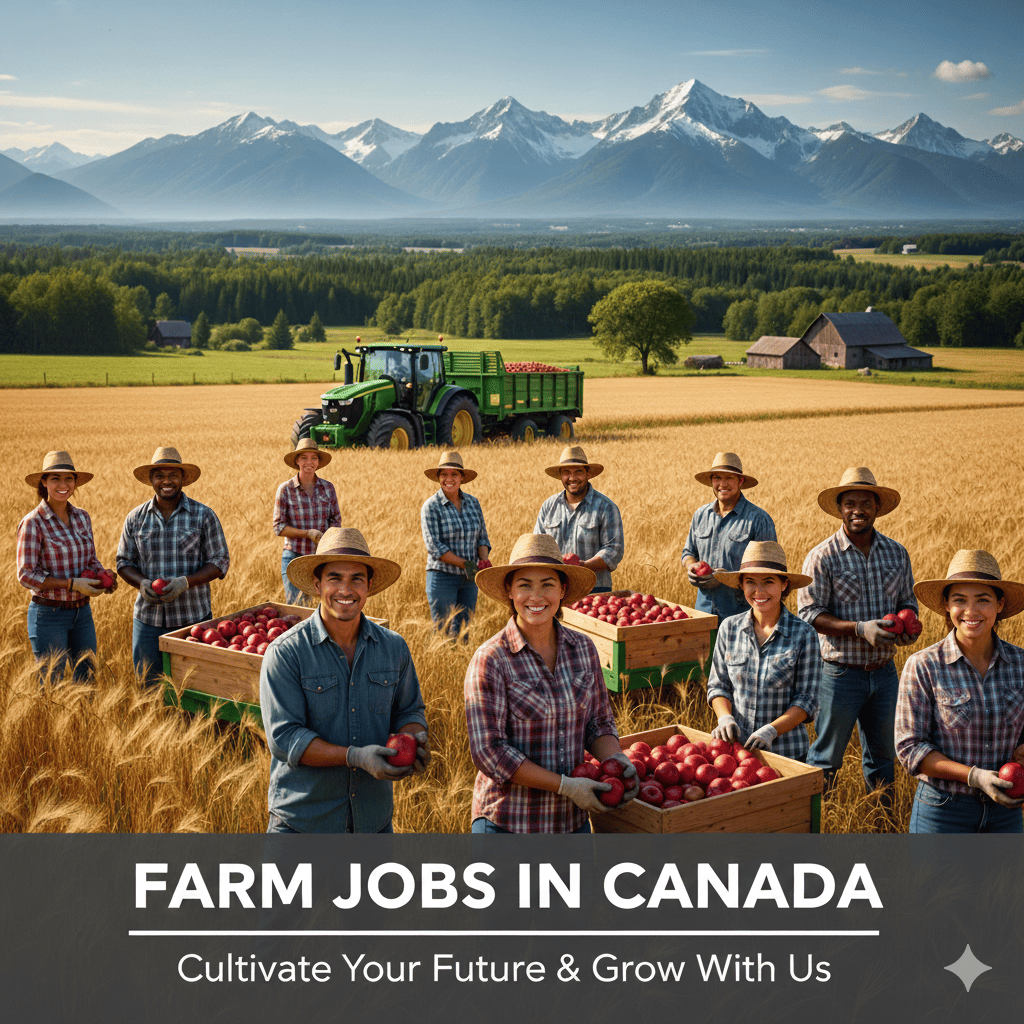
Complete Guide to Farm Jobs in Canada (2025–2026)
Farm jobs in Canada are a critical part of the country’s agricultural economy and one of the most consistent sources of employment for local and foreign workers. Canada relies heavily on farms to produce fruits, vegetables, grains, dairy, meat, and other agricultural products for domestic use and export. Due to seasonal demands, physically demanding work, and a limited local workforce willing to take on agricultural roles, farms across Canada face ongoing labour shortages. As a result, farm jobs are widely available and often open to foreign workers through formal work permit programs. For individuals seeking practical employment with minimal educational requirements, farm work in Canada offers steady income, accommodation options, and potential long-term opportunities.
Farm jobs range from seasonal field work to year-round positions in livestock, greenhouse operations, and food production. While the work can be physically challenging and weather-dependent, it provides valuable experience, legal work opportunities, and in some cases a pathway toward permanent residency.
Why Farm Jobs Are in High Demand in Canada
Canada’s agricultural sector depends on timely labour to plant, maintain, and harvest crops. Many farms operate on tight seasonal schedules, and delays can result in major financial losses. Local labour supply is often insufficient, particularly in rural areas and during peak seasons. This has made foreign agricultural workers essential to Canada’s food system.
Government-supported programs allow employers to hire foreign workers when Canadians are unavailable. As the agricultural sector expands and modernizes, demand continues for both low-skilled and semi-skilled farm workers. Greenhouse farming, dairy operations, and food processing facilities now require year-round labour, further increasing demand.
Types of Farm Jobs in Canada
Farm jobs vary depending on crop type, location, and season. Understanding these roles helps job seekers choose positions suited to their abilities and preferences.
Crop and Field Worker Jobs
Crop workers perform tasks such as planting, watering, weeding, harvesting, sorting, and packing fruits and vegetables. These jobs are common in provinces like Ontario, British Columbia, Quebec, and Nova Scotia. Field work is often seasonal and physically demanding, requiring long hours outdoors.
Fruit Picking and Harvesting Jobs
Fruit picking jobs involve harvesting apples, berries, grapes, cherries, and other fruits. These roles are usually seasonal and paid hourly or by quantity harvested. Speed, stamina, and care in handling produce are important for success.
Livestock and Dairy Farm Jobs
Livestock workers care for animals such as cows, poultry, pigs, and sheep. Duties may include feeding, cleaning, milking, monitoring animal health, and maintaining barns. Dairy farm jobs are often year-round and may involve early morning or late-night shifts.
Greenhouse and Nursery Jobs
Greenhouse workers grow plants, vegetables, and flowers in controlled environments. These jobs are less weather-dependent and often available year-round. Tasks include planting, pruning, watering, pest control, and packaging.
Farm Equipment Operator Jobs
Equipment operators handle tractors, harvesters, irrigation systems, and other farm machinery. These roles require experience and training but offer higher pay. Safety awareness is critical due to the use of heavy equipment.
Salary Expectations for Farm Jobs in Canada
Farm job wages in Canada depend on role, location, and season. Entry-level farm workers typically earn between CAD $28,000 and $38,000 per year. Hourly wages usually range from CAD $15 to $20 per hour, often aligned with provincial minimum wage laws.
Specialized roles such as equipment operators or experienced livestock workers can earn higher wages. Some employers provide free or low-cost accommodation, meals, or transportation, which significantly reduces living expenses. Overtime may be available during peak seasons.
Basic Requirements for Farm Jobs in Canada
Farm jobs are generally accessible and do not require advanced education, but employers expect workers to meet basic standards.
Education and Experience
Most farm jobs do not require formal education. Prior farming or agricultural experience is helpful but not mandatory for entry-level roles. Employers often provide basic training.
Physical Ability and Work Conditions
Farm work is physically demanding and may involve lifting, bending, long hours, and working in hot, cold, or wet conditions. Workers must be physically fit and able to adapt to outdoor environments.
Language Skills
Basic English or French skills are helpful for understanding instructions and safety guidelines. In many farms, supervisors may speak multiple languages to assist foreign workers.
Seasonal Agricultural Worker Program and Work Permits
Canada hires many foreign farm workers through the Seasonal Agricultural Worker Program and the Temporary Foreign Worker Program. These programs allow approved employers to bring workers for specific agricultural tasks. Work permits are tied to the employer and job location.
Workers are protected by Canadian labour laws, including minimum wage, safe working conditions, and access to healthcare. Employers must meet strict requirements regarding housing and worker welfare.
How to Find Farm Jobs in Canada
Farm jobs are advertised through government job portals, agricultural associations, recruitment agencies, and farm websites. Many foreign workers are recruited through official programs in their home countries. Applying through verified channels reduces the risk of fraud.
Job seekers should be cautious of agents who charge high fees or make unrealistic promises. Legitimate farm job offers come directly from employers or authorized recruitment channels.
Working Conditions and Daily Life
Farm work often involves early mornings, long days, and physically demanding tasks. Housing is usually located on or near the farm, which can be convenient but may limit access to urban amenities. Many workers value the sense of community and teamwork on farms.
Despite the challenges, farm jobs offer consistent work, fresh air, and opportunities to save money due to lower living costs.
Career Growth and Long-Term Opportunities
Farm jobs can lead to long-term opportunities for committed workers. With experience, workers may advance to supervisory roles, equipment operation, or specialized agricultural positions. Some provinces offer immigration pathways for agricultural workers who gain Canadian experience.
Agricultural skills are transferable and in demand worldwide, providing long-term career value.
Important Advice for Job Seekers
Foreign workers should only accept farm jobs through verified employers and official programs. Avoid paying recruitment fees and always confirm work permit details. Be prepared for hard work and changing conditions.
Farm jobs in Canada provide a realistic and legal way to earn income, gain experience, and contribute to the country’s food supply. For individuals willing to work physically demanding jobs, agriculture remains one of the most reliable employment sectors in Canada.