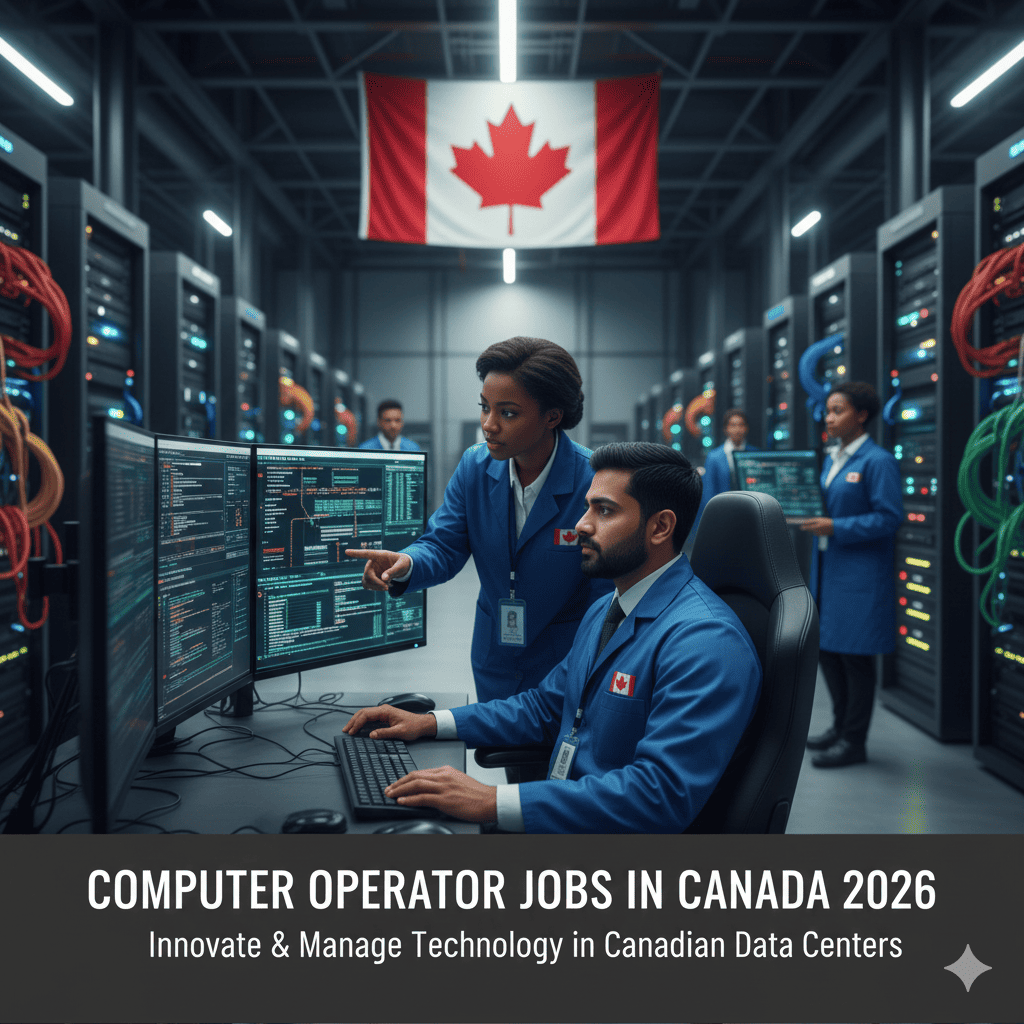
Complete Guide to Computer Operator Jobs in Canada (2025–2026)
Computer operator jobs in Canada are a practical and accessible career option for individuals with basic to intermediate computer skills who are seeking stable employment across multiple industries. Despite automation and cloud-based systems, organizations in Canada still rely heavily on computer operators to manage data entry, monitor systems, maintain records, operate office software, and support daily IT and administrative operations. These roles exist in government offices, private companies, hospitals, schools, banks, factories, logistics firms, and service-based businesses. Due to workforce shortages, digital expansion, and growing administrative needs, computer operator jobs continue to offer steady demand, especially for entry-level workers, newcomers, and foreign applicants with relevant skills.
Computer operator is often used as an umbrella term in Canada. It can include data entry operators, office computer operators, system monitoring staff, IT support assistants, and administrative operators who handle computer-based tasks. While these jobs may not always require advanced degrees, employers value accuracy, reliability, and practical software knowledge. For many immigrants and newcomers, computer operator roles act as a stepping stone into the Canadian workforce and can later lead to higher-level administrative or IT positions.
Why Computer Operator Jobs Are in Demand in Canada
Canada’s economy is increasingly data-driven. Every organization generates, stores, and processes large volumes of digital information. From payroll systems and inventory management to customer databases and scheduling platforms, computers are central to daily operations. While advanced IT professionals design and maintain systems, computer operators ensure that these systems run smoothly on a day-to-day basis. They input data, verify records, monitor processes, and flag issues before they escalate.
Another reason for demand is workforce turnover. Many computer operator roles are entry-level or transitional positions, meaning employees often move on to other roles after gaining experience. This creates continuous hiring needs. Additionally, small and medium-sized businesses across Canada often lack fully automated systems and rely heavily on human operators to manage their digital workflows. The rise of remote work has also expanded opportunities for computer operators who can perform tasks online, increasing demand beyond major cities.
Types of Computer Operator Jobs in Canada
Computer operator jobs vary widely depending on the industry, employer size, and technical requirements. Understanding these variations helps job seekers target roles that match their skills and experience.
Data Entry Operator Jobs
Data entry operators are responsible for entering, updating, and maintaining information in databases, spreadsheets, and company systems. These jobs require speed, accuracy, and attention to detail. Data entry operators may work with financial records, customer information, medical data, inventory lists, or survey results. While often considered entry-level, these roles are essential for maintaining data integrity and operational efficiency.
Office Computer Operator Jobs
Office computer operators handle general administrative and clerical tasks using computers. Their duties may include preparing documents, managing emails, updating records, generating reports, and supporting office staff. These roles are common in government departments, educational institutions, healthcare facilities, and private offices. Familiarity with word processing software, spreadsheets, and basic office systems is crucial.
IT and Systems Monitoring Operator Jobs
Some computer operators work in technical environments where they monitor computer systems, servers, or networks. These roles may involve tracking system performance, responding to alerts, running backups, and reporting issues to IT specialists. While not as advanced as system administrator roles, these positions require basic technical understanding and the ability to follow procedures accurately.
Remote and Online Computer Operator Jobs
Remote computer operator jobs have increased significantly in Canada. These roles may include online data processing, digital record management, customer support documentation, or virtual administrative assistance. Employers value candidates who can work independently, maintain productivity, and communicate effectively in remote settings.
Salary Expectations for Computer Operator Jobs in Canada
Salaries for computer operator jobs in Canada depend on experience, job type, location, and industry. Entry-level computer operators typically earn between CAD $35,000 and $45,000 per year. With experience, salaries can rise to CAD $50,000 to $60,000 annually. Specialized roles involving system monitoring or technical support may offer higher pay.
Hourly wages usually range from CAD $17 to $28 per hour. Government and unionized positions often provide structured pay scales, job security, and benefits. In addition to base pay, many employers offer benefits such as health insurance, paid leave, and opportunities for overtime. While computer operator jobs may not offer extremely high salaries initially, they provide stability and consistent income.
Basic Requirements to Become a Computer Operator in Canada
Computer operator jobs generally have fewer barriers to entry compared to regulated professions. However, employers still expect candidates to meet certain basic requirements.
Education and Skills
Most computer operator positions require at least a high school diploma. Some employers prefer candidates with certificates or diplomas in computer applications, office administration, information technology, or business studies. Practical skills are often more important than formal education. Employers look for proficiency in common software such as word processors, spreadsheets, email systems, and database tools.
Typing Speed and Accuracy
Typing speed and accuracy are critical, especially for data entry roles. Employers may test candidates on typing ability and attention to detail. Errors in data processing can have serious consequences, so reliability and consistency are highly valued.
Language and Communication Skills
Basic to strong English or French language skills are required depending on the province and workplace. Computer operators must understand instructions, communicate with supervisors, and document information clearly. In bilingual environments, knowledge of both English and French can be an advantage.
Training and Certifications
While not always mandatory, training and certifications can significantly improve employability. Short courses in office software, data management, or basic IT support are widely available in Canada. Certifications in widely used software tools demonstrate competence and commitment to professional development.
Some employers provide on-the-job training, especially for proprietary systems or industry-specific software. Willingness to learn and adapt to new technologies is often more important than prior experience with a specific system.
Immigration and Work Permit Options for Computer Operators
Foreign nationals must have legal authorization to work in Canada. Computer operator jobs may be eligible under employer-sponsored work permits, depending on the job classification and labour market needs. Employers must demonstrate that they could not find a suitable Canadian worker for the role.
Computer operator experience can also support permanent residency applications under certain immigration programs, especially when combined with Canadian work experience. While these jobs are not always classified as high-skilled, they can still play a role in building eligibility for long-term settlement when combined with education, language proficiency, and local experience.
How to Find Computer Operator Jobs in Canada
Computer operator jobs are advertised through online job portals, company websites, staffing agencies, and government employment platforms. Temporary staffing agencies are particularly active in this field, as many employers hire computer operators for short-term or contract roles that can later become permanent.
Job seekers should prepare a Canadian-style resume that clearly lists computer skills, software proficiency, typing speed, and relevant experience. Employers appreciate concise, well-organized resumes that focus on practical abilities rather than long descriptions.
Working Conditions and Daily Responsibilities
Computer operators typically work in office or remote environments. The work is usually full-time, though part-time and contract roles are common. Tasks may involve long hours at a computer, requiring good posture, focus, and time management. Attention to confidentiality and data protection is essential, as operators often handle sensitive information.
While the work can be repetitive, it is generally predictable and structured. Many people value these roles for their routine, stability, and clear expectations.
Career Growth and Advancement Opportunities
Computer operator jobs can serve as a foundation for career growth. With experience and additional training, operators can move into roles such as administrative assistants, office managers, IT support technicians, data analysts, or system administrators. Employers often promote reliable operators who demonstrate initiative and technical aptitude.
Continuous skill development is key. Learning advanced software, database management, or basic programming can open doors to higher-paying and more specialized roles within the technology and administrative sectors.
Important Advice for Job Seekers
Job seekers should be cautious of scams, especially for remote computer operator jobs. Legitimate employers do not charge fees for job placement. Always verify company details and job offers before sharing personal information. Be realistic about salary expectations and job responsibilities, especially for entry-level roles.
With the right skills, professionalism, and willingness to learn, computer operator jobs in Canada offer a reliable entry point into the workforce. They provide steady income, valuable experience, and opportunities for long-term career development in an increasingly digital economy.