Complete Guide to Factory Jobs in Luxembourg (2025–2026)
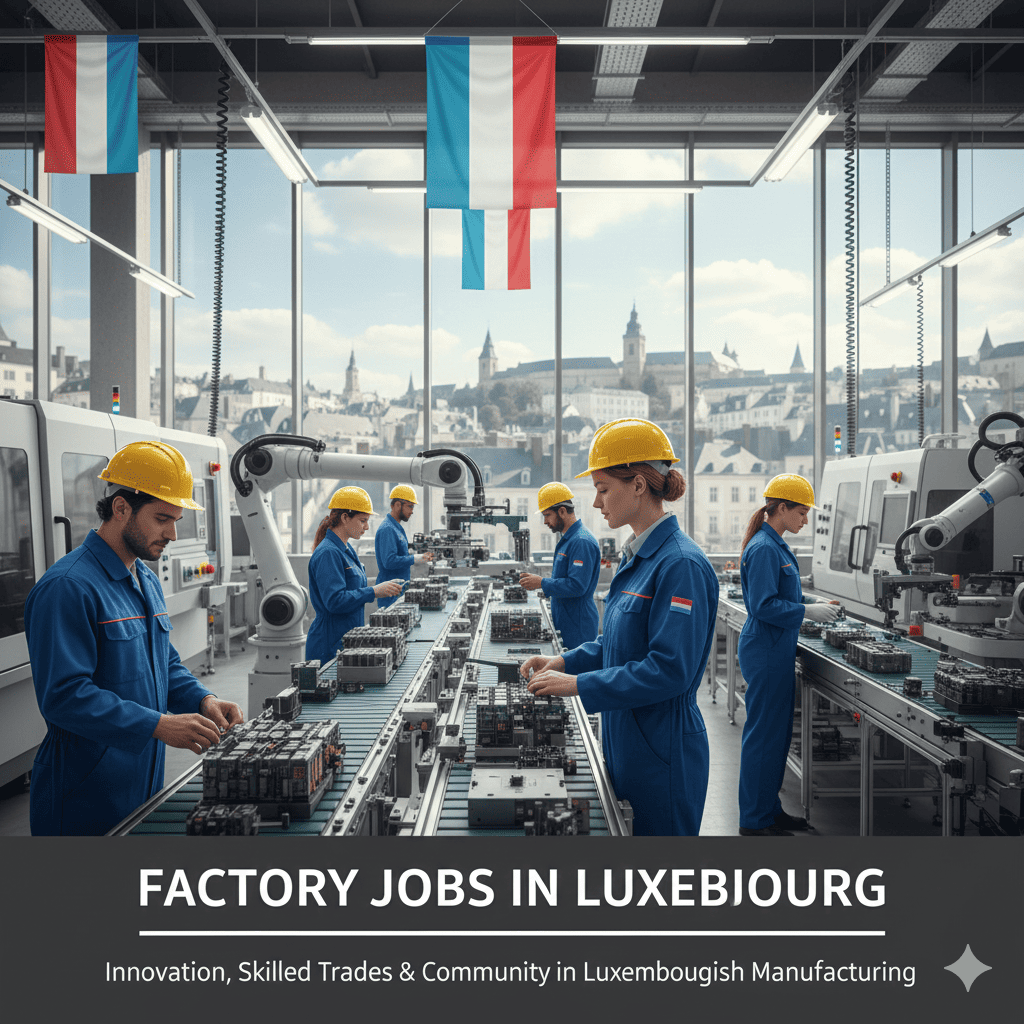
Factory jobs in Luxembourg are a solid employment option in a country with a strong industrial base, export-oriented manufacturing, and a thriving logistics sector. These roles are essential to the production and distribution of goods ranging from electronics and automotive components to food, plastics, chemicals, and pharmaceuticals. Due to ongoing demand for reliable labour, Luxembourg’s manufacturing sector offers opportunities for both local and foreign workers — especially for individuals willing to work in structured environments with clear expectations and steady pay.
This guide covers everything you need to know about finding and succeeding in factory jobs in Luxembourg, including job types, salary expectations, requirements, work permits for non-EU workers, how to find jobs, working conditions, and career growth pathways.
Why Factory Jobs Are in Demand in Luxembourg
Several structural factors keep factory jobs strong and consistent in Luxembourg:
- Industrial diversity: Luxembourg produces goods in multiple sectors, including pharmaceuticals, precision engineering, electronics, food processing, and automotive parts.
- Export-focused economy: A large share of manufacturing output is exported across the EU and internationally, requiring reliable factory labour for packaging, assembly, and logistics.
- Labour turnover: Repetitive production work often has high turnover, creating frequent vacancies.
- Labour shortages: Local workforce preferences lean toward service and office jobs, leading employers to recruit foreign workers for labour roles.
As a result, factory jobs remain accessible and open across Luxembourg’s industrial regions, especially near logistics hubs and manufacturing parks.
Types of Factory Jobs in Luxembourg
“Factory job” is a broad category. Below are the major types of positions you can find:
Production Line Worker
Production line workers are the backbone of manufacturing. Primary duties include:
- Operating assembly lines
- Checking product quality
- Packaging finished goods
- Sorting materials and components
These roles usually require no prior experience and are the easiest to enter when you’re new to the workforce or relocating.
Machine Operator
Machine operators work with specific tools or equipment that form part of the production process. Responsibilities include:
- Starting and monitoring machines
- Troubleshooting equipment issues
- Ensuring output meets quality standards
- Cleaning and routine machine maintenance
Experience with industrial machinery or technical training is a plus, and these roles often pay higher than basic line work.
Quality Control Inspector
Quality control inspectors ensure that manufacturing output meets standards and compliance requirements. Key tasks involve:
- Inspecting products visually and with measuring tools
- Documenting defects and anomalies
- Reporting to production leads or supervisors
Attention to detail and familiarity with inspection tools are valuable for this role.
Packaging and Shipping Assistant
These workers prepare finished products for transport and distribution. Duties typically include:
- Packing goods securely
- Labeling and barcoding
- Loading pallets
- Coordinating with warehouse and logistics teams
Fast-paced work and familiarity with packaging standards help improve productivity.
Material Handler
Material handlers work closely with warehouse teams to:
- Receive raw materials
- Unload supplies
- Transport items to production lines
- Manage stock rotation and storage
Forklift certification may be required for some positions.
Maintenance Technician
Maintenance technicians handle preventative and corrective equipment maintenance. Their duties include:
- Routine inspections
- Fixing mechanical or electrical faults
- Coordinating with production leads
Technical training or trade experience is usually expected for this category.
Salary Expectations for Factory Jobs in Luxembourg
Salaries in Luxembourg factories vary widely depending on the role, your experience, and whether you are working full-time or part-time.
Entry-Level (Production Worker)
Entry-level factory workers typically earn between €24,000 and €30,000 annually. Hourly wages often range from approximately €12 to €15.
Skilled/Licensed Roles (Machine Operator, Material Handler)
Skilled factory positions pay more, usually between €29,000 and €38,000 per year. Forklift certification and machine familiarity can push earnings toward the higher end of this range.
Supervisory or Technical Roles
Supervisors, quality control inspectors, and maintenance technicians often earn €38,000 to €48,000 or more depending on experience, certifications, and industry.
Specialized Technical or Engineering Support
For highly specialized roles — such as industrial electricians, CNC operators, or senior technicians — annual earnings may exceed €50,000, especially in precision manufacturing or pharmaceuticals.
Requirements to Work in Factory Jobs in Luxembourg
Factory jobs often have minimal barriers compared to professional fields, but you still need to meet some basic requirements.
Basic Eligibility and Documentation
- Valid passport or national ID
- Proof of legal work status (EU/EEA residence or work permit for non-EU/EEA citizens)
- CV/Resume
EU/EEA citizens can work in Luxembourg freely. Non-EU/EEA citizens need a work permit before employment — typically arranged by the employer.
Physical Fitness
Factory work is often physically demanding. Employers look for workers who can:
- Stand for extended periods
- Lift and carry moderate weights
- Work in rhythm with production cycles
Language Skills
Understanding basic English is sufficient for many factory roles. However, local languages like French, German, and Luxembourgish improve communication, safety compliance, and workplace integration.
Experience and Skills
For general labour or packaging, experience is often optional. Machine operators, maintenance technicians, and quality inspectors benefit from vocational or technical training. Forklift and equipment certifications can improve hiring prospects.
Work Permits and Immigration for Non-EU/EEA Workers
Non-EU/EEA citizens require a work permit to legally work in Luxembourg.
Work Permit Process
1. Job Offer: Receive a confirmed job offer from an employer.
2. Permit Application: Your employer applies for a work permit on your behalf.
3. Documentation: Submit your passport, CV, job contract, and any certificates (medical clearance may be required).
4. Approval: Once approved, you receive a permit specific to the job and employer.
Work permits are typically valid for several years and can often be renewed. Switching employers may require a new application unless you qualify under a broader residency category.
How to Find Factory Jobs in Luxembourg
Finding factory jobs often requires a mix of online searching, agency registration, and direct outreach.
Online Job Portals
- Jobs.lu
- Indeed Luxembourg
- Monster.lu
- LinkedIn Jobs
Use keywords like “factory worker,” “manufacturing,” “production line,” “machine operator,” and “warehouse packing” to narrow your search.
Recruitment Agencies
Staffing agencies place workers in production, packaging, warehouse, and technical support roles — including for foreign candidates with legal work status.
Direct Employer Sites
Large factories often list vacancies on their own career pages. Companies like pharma manufacturers, electronics firms, and major distributors recruit regularly and may offer structured application paths.
Walk-Ins and Job Fairs
Visiting industrial areas with your CV and contacting HR departments in person sometimes leads to immediate opportunities — especially for shift work or temporary contracts.
Application and Interview Tips
- Clean, Simple CV: Highlight availability, basic skills, physical readiness, and any relevant certificates.
- Be Honest: State your work permit status clearly.
- Show Reliability: Punctuality and attendance are often key hiring factors.
- Prepare for Basic Skills Checks: Some roles may include simple practical tests or safety briefings during interviews.
Working Conditions in Factory Jobs
Factory environments vary but often share these common characteristics:
- Shift work (day, evening, night)
- Fixed break times and safety routines
- Production quotas or targets
- Strict adherence to quality and safety standards
Expect structured schedules, regular supervision, and teamwork. Protective equipment such as gloves, ear protection, shoes, and vests is typically provided.
Safety and Regulations
Luxembourg enforces strong workplace safety laws that align with EU directives. Employers must:
- Provide health and safety training
- Offer protective gear
- Conduct regular safety audits
Workers should report hazards and follow all safety protocols. Compliance benefits both personal well-being and job continuity.
Career Growth and Long-Term Opportunities
Factory jobs can lead to career growth if you choose to develop skills and pursue higher roles:
Team Leader or Supervisor
With experience, workers often become shift leads or team supervisors managing small groups.
Skilled Technician Roles
With training in machine operation, maintenance, or quality control, you can specialize and earn higher pay.
Logistics and Inventory Positions
Experience in warehouse packing, inventory scanning, or stock management can lead to logistics coordination roles.
Quality Assurance and Safety Roles
People with attention to detail and training may move into QA or safety specialist roles.
Important Tips for Job Seekers
- Avoid scams: Legitimate employers do not charge job seekers for placement.
- Be flexible: Shift willingness increases employment options.
- Document readiness: Keep ID, passport copies, and any certificates ready for fast submission.
- Stay fit: Physical stamina helps in production and material handling roles.
- Follow safety rules: Strict safety compliance protects you and enhances employer trust.
Factory jobs in Luxembourg offer a reliable path to steady employment, skill acquisition, and career mobility. With the right preparation, persistence, and willingness to work, you can successfully enter this sector and grow alongside Luxembourg’s dynamic economy.