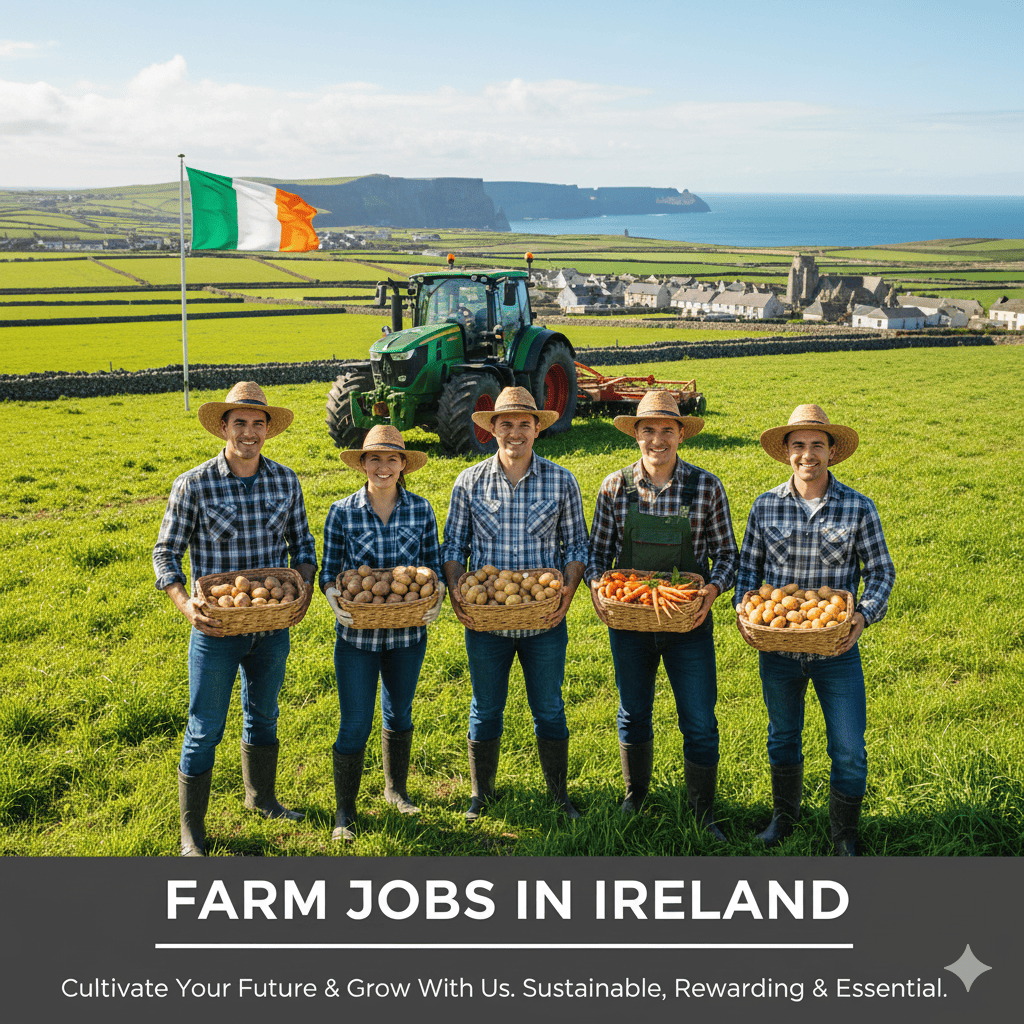
Complete Guide to Farm Jobs in Ireland (2025–2026)
Farm jobs in Ireland offer stable employment opportunities that range from entry‑level seasonal work to year‑round roles with growth potential. Agriculture remains an important sector in Ireland, with farms producing livestock, dairy, cereals, vegetables, fruits, and horticultural products for both domestic consumption and export. Because of seasonal peaks in planting and harvesting and ongoing needs for animal care and greenhouse management, farm jobs are consistently in demand.
Whether you’re a local resident looking for work, a student wanting seasonal income, or a foreign worker interested in agricultural opportunities, Ireland’s farm jobs are accessible with minimal formal education required — though experience and specific skills can improve pay and job prospects.
Why Farm Jobs Are in Demand in Ireland
Agriculture in Ireland plays a major role in the economy. Key reasons farm jobs are consistently available include:
- Seasonal labour needs: Planting, harvesting, and seasonal crop work require extra hands in spring through autumn.
- Livestock and dairy production: Ireland’s global reputation for dairy and meat products creates ongoing work needs for animal care.
- Greenhouse and horticultural work: Year‑round roles in controlled environments support steady employment.
- Labour shortages: Many farms struggle to find local workers willing to do physically demanding agricultural tasks.
Types of Farm Jobs in Ireland
Farm jobs in Ireland vary depending on the type of agriculture and the time of year. Below are the most common categories:
Field and Crop Workers
Field workers help with tasks that support crop production, such as:
- Preparing soil and field beds
- Sowing seeds or planting seedlings
- Watering and irrigation tasks
- Weeding, pruning, and crop maintenance
- Harvesting field crops such as potatoes, cereals, root vegetables, and seasonal fruits
This work is often seasonal and involves outdoor labour in varied weather conditions.
Greenhouse and Controlled Environment Workers
Greenhouse workers operate within controlled environments for crops like flowers, herbs, salad greens, and other horticultural products. Job duties may include:
- Planting and transplanting seedlings
- Irrigation system management
- Pest and disease control
- Monitoring climatic conditions
- Harvesting and packing produce
Greenhouse roles are often more stable year‑round compared with field work.
Livestock and Animal Care Jobs
Livestock farm workers care for animals such as cows, sheep, pigs, and poultry. Responsibilities often include:
- Feeding and watering animals
- Cleaning shelters and pens
- Monitoring animal health
- Assisting with assisted births
- Milking (for dairy farms)
These roles require commitment and physical effort, often involving early mornings and regular daily routines.
Harvest and Packing Assistants
During peak seasons, farms hire additional staff to assist with harvest and post‑harvest tasks such as:
- Sorting and grading products
- Packing produce for sale or transport
- Operating basic packing equipment
These jobs are usually part‑time or seasonal and pay hourly.
Farm Maintenance and Equipment Operators
These workers maintain farm equipment and perform mechanical tasks such as:
- Operating tractors and harvesters
- Repairing and maintaining irrigation systems
- Maintaining farm buildings, fences, and tools
These positions often require prior experience or training and pay better than basic roles.
Salary Expectations for Farm Jobs in Ireland
Wages in farm jobs vary depending on experience, agricultural sector, contractual status, and location.
Entry‑Level Field Workers
Entry‑level farm workers earn approximately €22,000 to €26,000 per year. Hourly rates for casual or part‑time workers typically range from €10 to €14.
Greenhouse and Packing Jobs
Greenhouse assistants and harvest packers typically earn €24,000 to €29,000 annually, with hourly work paying €11–€15 depending on seasonal demand.
Livestock and Animal Care
Livestock workers generally earn €25,000–€30,000 per year. Dairy farm roles, especially those involving milking and early morning shifts, may offer slightly higher rates.
Maintenance and Machinery Operators
Workers with equipment skills and experience — e.g., operating tractors — earn €28,000–€35,000 annually.
Additional benefits may include accommodation support (especially in seasonal work), meals, transportation allowances, and paid time off in permanent positions.
Seasonal vs Year‑Round Farm Jobs
Farm jobs in Ireland fall into two broad categories:
Seasonal Jobs
Seasonal farm work peaks during planting and harvest times, usually spring through autumn. These roles are typically:
- Temporary and hourly paid
- Ideal for students and short‑term workers
- Available without extensive experience
Seasonal roles often do not include benefits like sick leave or paid holidays.
Year‑Round Jobs
Permanently employed farm workers — especially in livestock, greenhouse operations, or machinery roles — receive regular pay and benefits such as:
- Paid leave
- Contractual minimum wage protections
- Training and skill development
These jobs offer greater stability.
Basic Requirements for Farm Jobs in Ireland
Requirements vary based on job type but generally include:
Legal Right to Work
EU/EEA citizens can work in Ireland freely. Non‑EU/EEA citizens need a valid work permit before working.
Physical Fitness
Most farm roles require physical stamina for tasks like lifting, walking long distances in fields, and repetitive movements.
Language Skills
Basic English proficiency helps with communication on mixed‑language farms, following health and safety instructions, and working in teams. Additional languages may help but are not required.
Experience and Skills
Many entry‑level jobs do not require prior experience and provide on‑the‑job training. Experience or vocational skills (e.g., machinery operation) improve job prospects and pay.
Work Permits and Immigration for Foreign Workers
Non‑EU/EEA workers must have proper immigration status and a work permit to be employed legally in Ireland.
Work Permit Types
Common permits include:
- General Employment Permit: For jobs with a salary above a national threshold and where no suitable EU/EEA candidates are available.
- Seasonal Work Permit: Designed specifically for temporary, time‑limited agricultural jobs; employers often arrange these.
The work permit application process requires a confirmed job offer, employer sponsorship, and supporting documents including passport, CV, and any training certificates.
How to Find Farm Jobs in Ireland
There are several effective ways to find farm jobs in Ireland:
Online Job Portals
- Indeed Ireland
- Jobs.ie
- IrishJobs.ie
- Seasonal work sites and farming sites
Search using keywords like “farm worker,” “agriculture labour,” “harvest helper,” or “greenhouse assistant.”
Recruitment and Agricultural Agencies
Agencies specialising in seasonal or farm placements often help match workers with farms and may assist with seasonal work permits.
Direct Outreach
Visiting farms in rural areas with a CV and showing willingness to work can result in immediate hiring during peak seasons.
Local Community Networks
Connections through community groups and local worker networks often reveal unadvertised job opportunities.
Interview and Hiring Tips
- Provide a clear CV: Highlight availability, physical readiness, and any farm experience.
- Be prepared for practical questions: Employers may ask how you handle outdoor work and weather conditions.
- Show flexibility: Willingness to work early mornings, evenings, and weekends increases chances of hiring.
- Ask about work permits: If you’re a non‑EU/EEA national, clarify work permit arrangements upfront.
Working Conditions in Farm Jobs
Farm work often involves outdoor conditions — from bright sun to rain or cooler weather. Tasks are physical but structured, and many farms provide protective gear such as gloves, boots, and waterproof clothing. Greenhouse jobs may be more sheltered but still require constant movement and attention to tasks.
Shift lengths vary by farm; seasonal harvest work may involve long days, while year‑round roles typically follow more standard hours.
Health and Safety Requirements
Farmers have legal obligations to protect workers’ health and safety. Training should be provided on:
- Safe handling of machinery and tools
- Animal handling and biosecurity practices
- Sun and weather exposure precautions
- Emergency response procedures
Workers are encouraged to follow all safety protocols to reduce risk.
Career Growth and Opportunities
Farm jobs offer more than just temporary work. With experience and additional skills, workers can progress into:
- Supervisory roles
- Greenhouse management
- Machinery operation and maintenance
- Agri‑business roles
Certifications in machinery operation, livestock care, or horticulture enhance long‑term job prospects and pay.
Important Tips for Job Seekers
- Avoid scams: Do not pay employers or agents to secure farm jobs — legitimate jobs pay you, not the other way around.
- Stay physically prepared: Farm work can be demanding; being fit and ready improves performance.
- Be flexible: Seasonal and shift availability increases job opportunities.
- Keep documentation ready: Valid ID, passport photos, and CVs speed up hiring.
Farm jobs in Ireland offer a practical entry point into the workforce, stable seasonal work, and pathways to more advanced agricultural careers. With the right approach and readiness to work hard, you can build both skills and income in Ireland’s agricultural sector.