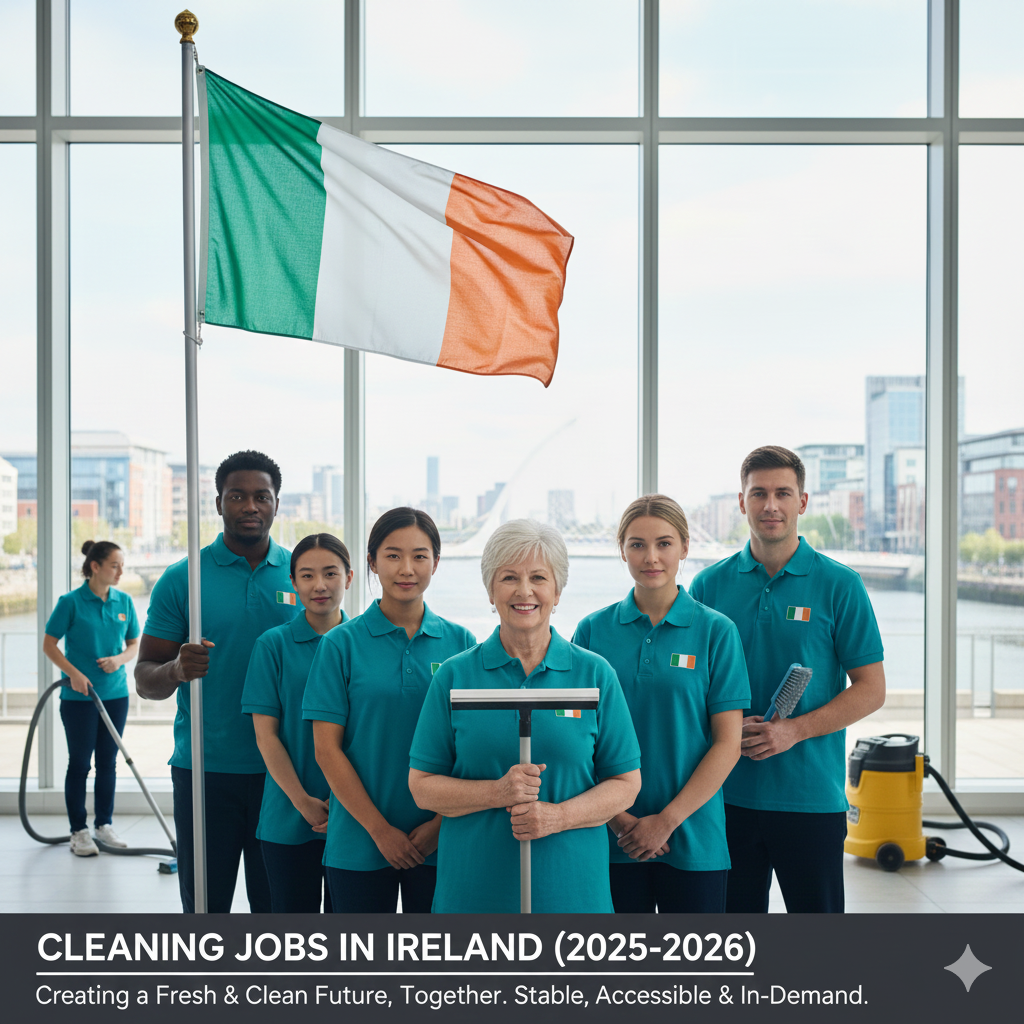
Complete Guide to Cleaning Jobs in Ireland (2025–2026)
Cleaning jobs in Ireland are plentiful and among the most accessible entry‑level opportunities in the Irish labour market. As long as hotels, offices, hospitals, schools, retail spaces, factories, and residential complexes exist, there will be a demand for cleaning staff. These roles provide stable work, flexible hours, and a realistic path to legal employment for local residents and foreign workers alike. While many cleaning jobs do not require formal qualifications, employers value reliability, attention to detail, and professionalism.
This guide covers everything you need to know about cleaning jobs in Ireland — including job types, wages, requirements, how to find work, work permits for non‑EU/EEA citizens, working conditions, career growth, and practical job‑search tips.
Why Cleaning Jobs Are in Demand in Ireland
Ireland’s economy relies on a broad range of service sectors and facilities that require regular cleaning services, including:
- Hospitality (hotels, hostels, guesthouses)
- Healthcare (hospitals, clinics, care homes)
- Office buildings and corporate spaces
- Retail shops and shopping centres
- Factories and warehouses
- Residential complexes and private homes
Ongoing demand for hygiene and sanitation has increased since the pandemic, and public expectations for cleanliness remain high. Cleaning roles are essential and frequently open.
Types of Cleaning Jobs in Ireland
“Cleaning jobs” is a broad category that includes multiple roles with varying responsibilities and environments:
Hotel Housekeeping and Room Attendants
Housekeeping teams maintain guest rooms and public areas in hotels, B&Bs, and guesthouses. Typical duties include:
- Making beds and replacing linen
- Cleaning bathrooms and restocking supplies
- Vacuuming and dusting rooms and corridors
- Responding to guest requests
These roles require attention to detail, the ability to work at pace, and a guest‑friendly attitude.
Office and Commercial Cleaning
Commercial cleaners maintain workplaces, offices, and business premises. Duties include:
- Emptying bins and sanitising surfaces
- Cleaning restrooms and kitchens
- Mopping and vacuuming floors
Work often occurs before, during, or after business hours.
Healthcare and Clinical Cleaning
Healthcare cleaners work in hospitals, clinics, and medical facilities. They clean patient areas, operating rooms, waiting rooms, and specialised zones. Their work must meet strict hygiene standards.
These roles require discipline and adherence to clinical cleaning protocols, though formal medical training is not mandatory.
Retail and Shopping Centre Cleaning
Retail cleaners maintain store floors, restrooms, entrances, and communal areas. Tasks include:
- Sweeping and mopping floors
- Cleaning fitting rooms and restrooms
- Maintaining trash collection
These roles often involve shift patterns that match store opening hours.
Industrial and Warehouse Cleaning
Cleaners in industrial settings maintain large spaces, production floors, loading bays, and common areas. Physical stamina and familiarity with industrial cleaning tools are helpful.
Domestic Cleaning and Live‑in Roles
Some positions involve cleaning private homes, offices, or estates. In some cases, live‑in arrangements are provided with accommodation included.
Salary Expectations for Cleaning Jobs in Ireland
Salaries for cleaning jobs vary by sector, type of facility, and shift patterns. Ireland’s minimum wage and labour laws ensure fair compensation, but rates differ depending on the employer and region.
Entry‑Level Cleaners
Entry‑level cleaning staff typically earn between €24,000 and €28,000 per year. Hourly rates generally range from €12 to €14.
Experienced or Specialized Cleaners
Cleaners with experience, especially in healthcare or industrial settings, can earn €28,000–€32,000 annually. Night shift or weekend work sometimes attracts shift premiums.
Supervisory Roles
Cleaning supervisors and team leads may earn €32,000–€40,000, depending on responsibilities such as scheduling, inventory, and team management.
Domestic or Live‑in Cleaners
Domestic roles with accommodation included may offer lower base wages but significant cost savings on housing.
Basic Requirements for Cleaning Jobs in Ireland
Most cleaning jobs in Ireland do not require formal education or qualifications, though certain skills and attributes improve employability.
Legal Eligibility to Work
EU/EEA citizens can work in Ireland without a permit. Non‑EU/EEA citizens must have a valid work permit before employment. These are usually arranged by the employer.
Language Skills
Basic English proficiency is necessary for understanding instructions, communicating with supervisors, and following safety guidelines. Additional language skills may be an advantage, especially in hospitality and healthcare settings.
Physical Fitness and Reliability
Cleaning work often requires standing, bending, and lifting for extended periods. Employers value reliability, punctuality, and consistent attendance.
Experience and Skills
Previous cleaning experience is helpful but not essential for many entry‑level roles. Experience with commercial equipment, attention to detailed cleaning, and ability to work independently are strong assets.
Work Permits and Immigration for Non‑EU/EEA Workers
Non‑EU/EEA citizens need legal authorization to work in Ireland. The most common permits relevant to cleaning jobs are:
- General Employment Permit (GEP): Suitable for roles where no local workers are available — often applicable to larger employers hiring cleaners.
- Critical Skills Employment Permit (CSEP): For occupations with higher skill thresholds and salary levels. Cleaning jobs typically do not qualify; however, if combined with supervisory or compliance responsibilities at high salaries, eligibility may be considered.
Work permit applications require a confirmed job offer, employer sponsorship, proof of identity, and compliance with Irish immigration regulations.
How to Find Cleaning Jobs in Ireland
Cleaning jobs are widely advertised and in nearly every city and town in Ireland. Effective job search strategies include:
Online Job Portals
- Indeed Ireland
- Jobs.ie
- IrishJobs.ie
- LinkedIn Jobs
Use filters for location, contract type, shift pattern, and cleaning sector (hospitality, retail, healthcare).
Recruitment Agencies
Agencies specialising in facilities, hospitality, and services will help match cleaners with employers. They often provide support for contract and permanent placements.
Direct Applications
Many hotels, hospitals, and large office campuses accept walk‑in CV submissions. Bringing a printed CV and a professional demeanor can be effective.
Community and Social Networks
Friends, community groups, and local job referral networks often lead to unadvertised openings — particularly for shift work and part‑time cleaning roles.
Application and Interview Tips
- Professional CV: Clearly list any cleaning or related experience, availability, and contact details.
- Be ready for practical questions: Employers may ask about cleaning methods, handling chemicals safely, and dealing with busy schedules.
- Demonstrate reliability: Emphasise punctuality, willingness to follow procedures, and ability to work independently.
- Follow up: A polite follow‑up message can improve your chances after interviews.
Working Conditions and Job Expectations
Cleaning jobs may involve:
- Shift work, including mornings, evenings, weekends, and night shifts
- Physical tasks such as lifting equipment and standing for long periods
- Use of cleaning chemicals and equipment
- Team or individual work settings
Most employers provide uniforms, basic training, and personal protective equipment.
Health and Safety Standards
Cleaners must follow occupational health and safety guidelines, including:
- Safe use of cleaning chemicals
- Handling equipment like vacuums and polishers safely
- Understanding sanitisation protocols, especially in healthcare and food environments
Employers are responsible for training and protective gear, but workers must comply with safety rules at all times.
Career Growth and Advancement
Cleaning jobs can lead to long‑term careers:
- Team Leader / Supervisor: Overseeing cleaning staff and schedules
- Facilities Coordinator: Managing janitorial contracts and cleaning logistics
- Specialist Cleaning: Hazardous area cleaning, healthcare sanitation, or industrial grade cleaning
- Business Owner: Starting your own cleaning service company
Experienced cleaners who demonstrate reliability and expanded skills may progress into higher‑paying roles with managerial responsibilities.
Important Tips for Job Seekers
- Only work with reputable employers — cleaning agencies and hotels will not ask you for fees to get hired.
- Be flexible with shifts — morning, evening, and weekend work increases your chances.
- Maintain professionalism — reliability and a strong work ethic are highly valued in cleaning roles.
- Consider additional skills — e.g., chemical safety certificates, machinery training, or advanced sanitation training.
Cleaning jobs in Ireland offer stable, year‑round employment and pathways to advancement. With consistent effort, good communication skills, and a professional attitude, you can build a reliable career in the hospitality, healthcare, commercial or industrial cleaning sectors.