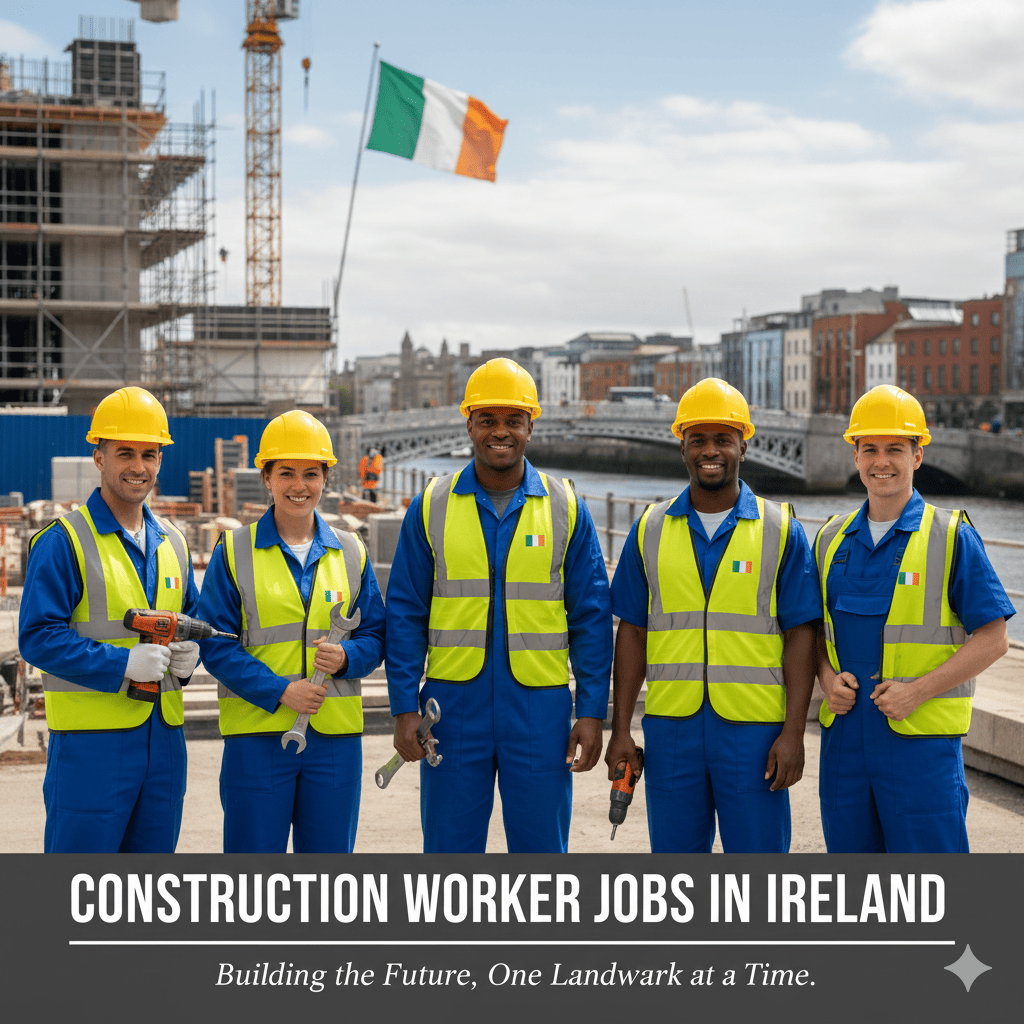
Complete Guide to Construction Worker Jobs in Ireland (2025–2026)
Construction worker jobs in Ireland remain among the most consistent and accessible employment opportunities for both local and foreign workers. Ireland’s construction industry drives major infrastructure projects, residential developments, commercial buildings, roadworks, and public facilities. With ongoing demand for housing, transportation upgrades, and industrial expansion, construction labour continues to be in high demand despite economic cycles. Construction jobs range from entry‑level labour roles to skilled specialised trades, offering both immediate employment opportunities and long‑term career progression.
This guide covers everything you need to know about construction worker jobs in Ireland — job types, salary expectations, requirements and certifications, work permits for non‑EU/EEA citizens, how to find jobs, application tips, working conditions, career development, and practical advice for job seekers.
Why Construction Worker Jobs Are in Demand in Ireland
Several economic and demographic factors contribute to sustained demand for construction workers in Ireland:
- Housing shortages: Ireland continues to build apartments, townhomes, and single‑family housing to meet population growth and urbanisation.
- Infrastructure development: Roads, bridges, public transport, and utilities projects need large construction crews.
- Commercial expansion: Offices, hotels, manufacturing facilities, and logistics hubs are under development.
- Renovation and sustainability upgrades: Energy retrofits, green building projects, and heritage restoration keep demand steady.
These trends make construction one of Ireland’s most resilient job sectors.
Types of Construction Worker Jobs in Ireland
Construction work covers a broad spectrum of roles. Some are entry‑level positions requiring minimal training, while others are skilled trades that need formal qualifications or apprenticeships.
General Construction Labourer
General labourers perform foundational tasks that support all areas of construction, including:
- Site preparation and cleanup
- Loading/unloading materials
- Assisting skilled tradespeople
- Basic formwork and concreting support
- Maintaining equipment and tools
This is one of the most common entry points for workers without formal training.
Carpentry and Formwork
Carpenters specialise in:
- Framing and structural builds
- Formwork for concrete pours
- Installing doors, windows, and cabinetry
Carpentry roles require specific skills and are typically higher‑paid than general labour.
Masonry and Bricklaying
Masons work with brick, stone, and block to build walls, facades, chimneys, and structural features. This is a skilled trade with significant demand in urban development projects.
Plumbing and Pipework
Plumbers and pipefitters install water systems, drainage, and gas lines. These roles often require certification and technical training.
Electrical Worker / Electrician
Electricians install, maintain, and repair electrical systems in buildings. Regulation and safety standards require proper licensing.
Concrete and Heavy Equipment Operators
Operators specialise in machinery such as:
- Excavators
- Bulldozers
- Loaders
- Cranes (specialised licences)
Operating heavy equipment usually pays more and requires training or certification.
Tiling, Flooring, and Finishing Trades
Finishers, tilers, and flooring installers handle detail work such as:
- Floor tiling
- Plastering
- Painting
- Interior finishes
These skills are in high demand for residential and commercial interiors.
Salary Expectations for Construction Jobs in Ireland
Salaries vary widely depending on skill level, certification, experience, and region. Dublin and urban centres often pay higher due to living costs and project density.
General Construction Labourer
Entry‑level labourers typically earn between €25,000 and €32,000 per year. Hourly rates for general labour often range from €13 to €17, depending on employer and experience.
Skilled Trades (Carpentry, Masonry, Tiling)
Skilled tradespeople usually earn between €32,000 and €45,000 annually. Those with specialised expertise or advanced experience can earn €45,000–€60,000.
Electricians and Plumbers
Certified electricians and plumbers often earn €40,000–€60,000 per year. Highly experienced tradespeople can exceed €65,000, especially with overtime or contract work.
Heavy Machinery Operators
Operators and plant technicians typically earn €35,000–€55,000 annually, with specialized crane operators earning more due to license requirements.
Requirements to Work in Construction in Ireland
Construction jobs range from minimal qualification roles to highly certified trades. Below is a breakdown of requirements by role type.
Education and Formal Requirements
- General labour: Minimum secondary education (high school) is usually sufficient.
- Skilled trades: Apprenticeship or technical training is expected (carpentry, masonry, tiling).
- Electrical and plumbing: Certified apprenticeship and trade licence are required.
- Heavy equipment: Operator certification (e.g., crane license) is mandatory.
Many construction workers begin as labourers and pursue trade training while working.
Safety Training and Certification
Workplace safety is a top priority in Irish construction. Employers require:
- Safe Pass (Ireland’s construction safety card)
- Manual handling training
- Working at heights certification (for relevant roles)
- Equipment‑specific certifications (e.g., forklift)
These credentials are often required before starting site work.
Language Skills
English proficiency is usually required to read safety instructions, liaise with supervisors, and understand site communication. Basic conversational ability may be sufficient for entry‑level roles, with advanced language skills adding value for supervisory positions.
Work Permits and Immigration for Non‑EU/EEA Workers
Non‑EU/EEA citizens must obtain the correct work authorization before legally working in Ireland.
Work Permit Options
The most relevant work permit categories for construction workers are:
- General Employment Permit (GEP): For workers filling jobs where no local labour is available. Requires employer sponsorship.
- Critical Skills Employment Permit (CSEP): For highly skilled roles with salaries above a certain threshold (construction supervisors, specialized technicians).
Entry‑level labour roles may not qualify for Critical Skills permits due to salary criteria, so most foreign construction workers enter via General Employment Permits.
Application Requirements
Work permits generally require:
- Job offer from a licensed Irish employer
- Proof of identity and qualifications
- Contract of employment
- Evidence that no EU/EEA candidate could fill the role
Your employer typically initiates and supports the permit process, which must be finalised before you begin work.
How to Find Construction Jobs in Ireland
Construction jobs are advertised across online platforms, recruitment agencies, and through direct employer outreach. Combining multiple approaches increases your chances of securing a position.
Online Job Portals
- Indeed Ireland
- Jobs.ie
- IrishJobs.ie
- CV‑Library
- LinkedIn Jobs
Search with keywords like “construction worker,” “site labourer,” “carpenter,” “electrician,” “plasterer,” and “equipment operator.”
Recruitment Agencies
Agencies specialising in construction and trades often place workers in short‑term, seasonal, and permanent roles. Register with multiple agencies to broaden your chances.
Direct Employer Outreach
Visiting construction sites or contractor offices with a CV in hand can be effective for entry‑level roles. Smaller firms often hire directly without posting online.
Networking
Networking with current construction workers, attending job fairs, and joining local community or trade groups exposes you to unadvertised opportunities.
Application and Interview Tips
- Clear CV: List experience, certifications, Safe Pass status, and availability.
- Prepare References: Employers value reliability, so past supervisor references help.
- Be Ready for Practical Questions: Safety, tools, and site protocols may come up.
- Professional Approach: Dress safely if visiting sites and be on time for interviews.
Working Conditions and Safety
Construction sites in Ireland follow strict health and safety regulations under the Health and Safety Authority (HSA). Employers provide safety equipment and training, but workers must also follow:
- Personal protective equipment (PPE)
- Site‑specific safety briefings
- Emergency procedures
- Regular tool and machine checks
Work can be outdoors in all weather conditions, and shift patterns vary by project phase.
Career Growth and Long‑Term Opportunities
Construction jobs can evolve into long‑term careers with training and experience:
- Skilled tradesperson: Through apprenticeships in carpentry, plumbing, or electrical work
- Supervisor / Site foreman: Managing teams and coordinating tasks
- Project management: With experience and qualifications
- Specialised roles: HVAC, crane operator, or safety officer
Many workers start as labourers and advance into higher roles with increased responsibility and pay.
Important Tips for Job Seekers
- Avoid job scams: Legitimate employers do not ask for upfront fees.
- Stay fit and ready: Successful construction workers can handle physical demands.
- Document readiness: Keep qualifications, references, and ID ready.
- Follow safety: Compliance with safety rules protects you and your job.
Construction worker jobs in Ireland offer a practical and rewarding route to employment, skills development, and long‑term career prospects. With the right preparation, certifications, and persistence, you can secure stable work and grow your expertise in one of Europe’s busiest construction markets.